
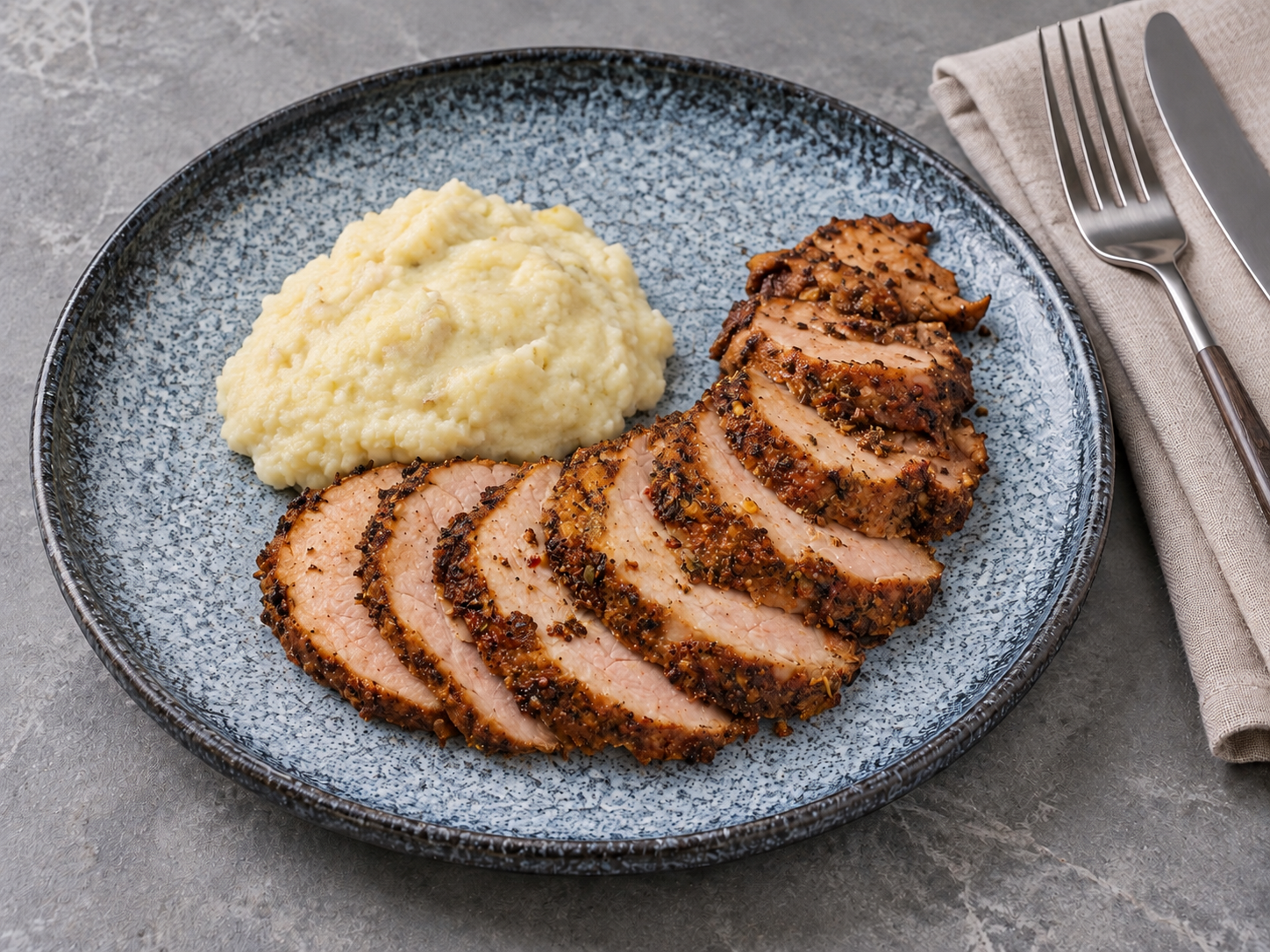
This post has been a long time coming. The subject is pork tenderloin, but the real story is what spices, marinades, and brines can do for a very lean cut of meat. We have talked about them before; now we can put the ideas to work. A juicy slice of pork is a much better argument than a lecture, anyway.
First, the tenderloin itself. These long muscles lie alongside the spine and do relatively little work, which helps explain their tenderness. In Greek, psaronefri combines the ideas of fish and kidney, a nod to the cut’s shape and location. Pork tenderloin is lean, and that is both its attraction and its challenge. With little fat to cushion it, it can go from juicy to dry before you have finished saying ‘tenderloin.’
A fatty cut such as pork shoulder can handle a long cook. Tenderloin needs a lighter touch. Seasoning, sensible marinating, and a thermometer help us build flavor without cooking the moisture out of it. Before we start, what is the difference between a brine and a marinade? Good question.
Brine: A water-and-salt solution, sometimes with sugar, herbs, or spices. Simple as that.
Marinade: A flavorful mixture that may contain oil, acid, water, herbs, and spices. Depending on the recipe, it might include other liquids too, even milk.
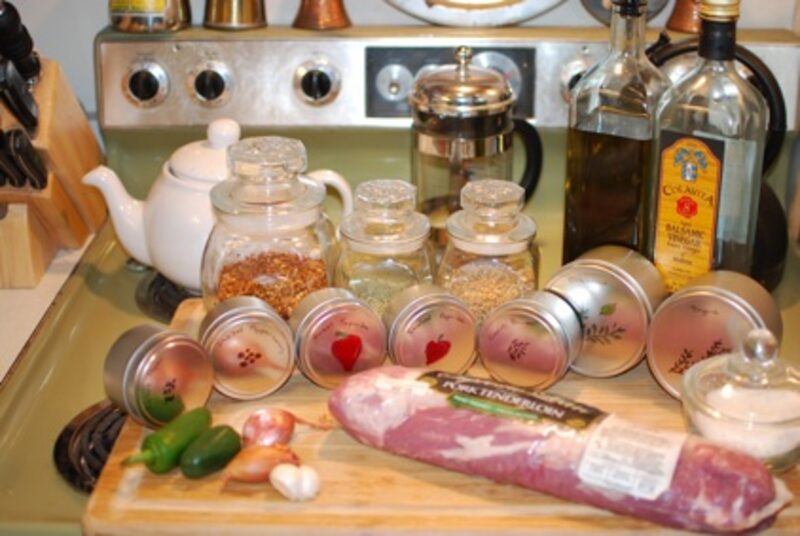
Here are the ingredients for this spice-packed marinade:
- 1 tbsp Oregano
- 1 tbsp Thyme
- 1 tbsp Rosemary
- 2 tbsp Coriander
- 1 tbsp Smoked black pepper
- 1 tbsp Cubeb pepper
- 1 tsp Red pepper flakes
- 1 tbsp Cumin
- 1 tbsp Sweet paprika
- 1 tbsp Smoked paprika
- 2 Shallots
- 2 cloves of garlic
- 2 Jalapeño
- 2 tbsp Salt
- 2 tbsp Brown sugar
- 1/4 cup Olive oil
- 1/4 cup Vinegar
- 1/4 cup Water
Smoked pepper, smoked paprika, cubeb pepper… yes, the spice cupboard is getting a workout. You do not need every unusual item to understand the idea. Choose flavors that work together: rosemary and garlic, brown sugar and heat. The other secret is coming in a moment.
Grind the whole spices and mix everything together. I use a mortar and pestle, so I start with the toughest ingredients while my arm is still fresh.
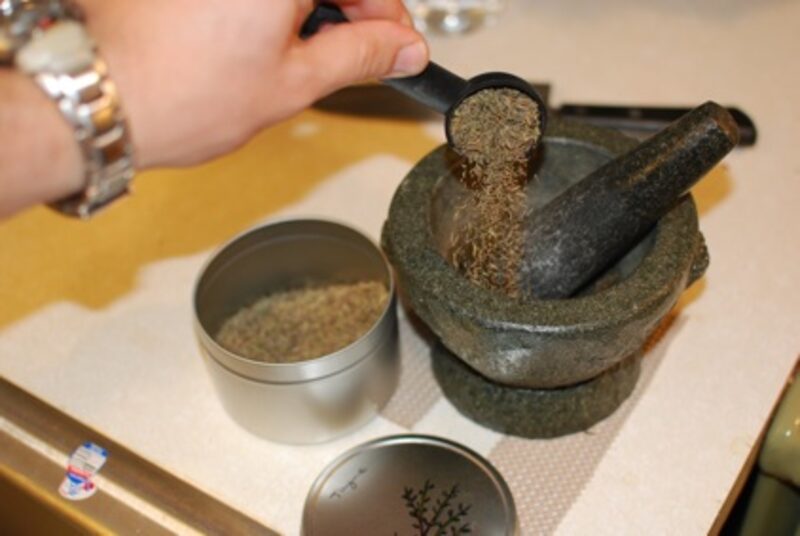
Rosemary…

Oregano. The thyme is already fine enough and does not need much grinding.
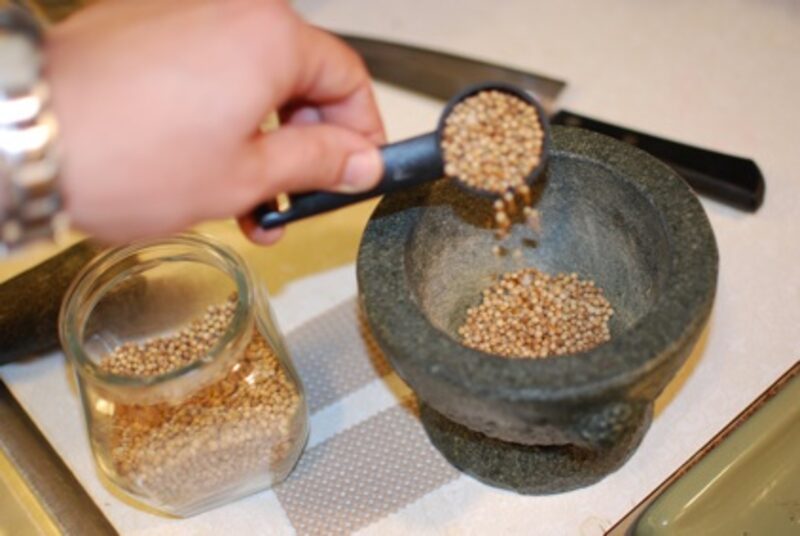
Coriander…

Smoked peppercorns.
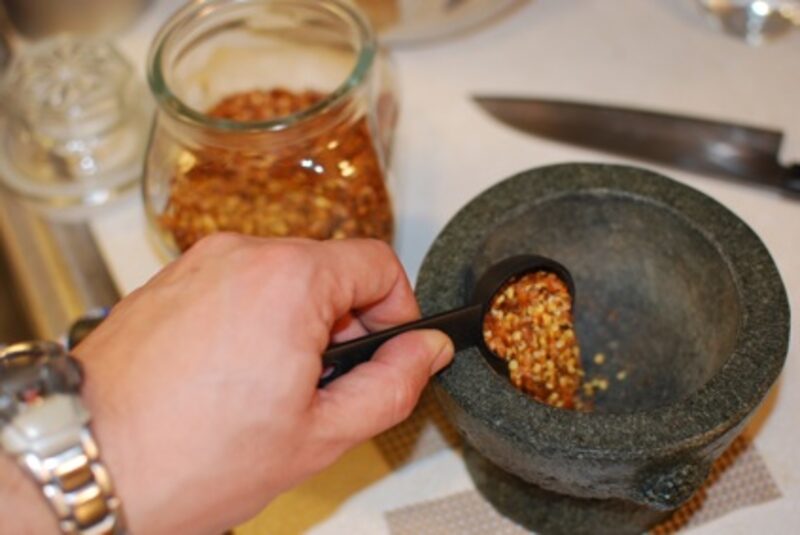
Red pepper flakes.
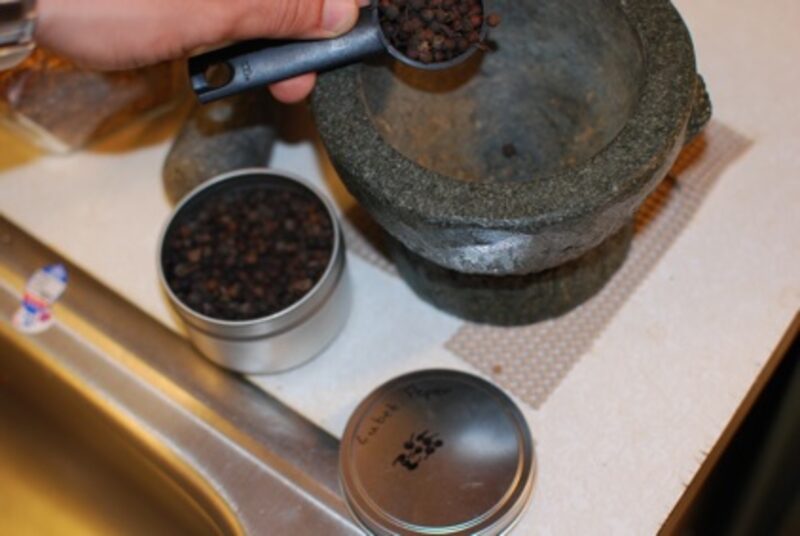
Cubeb pepper.
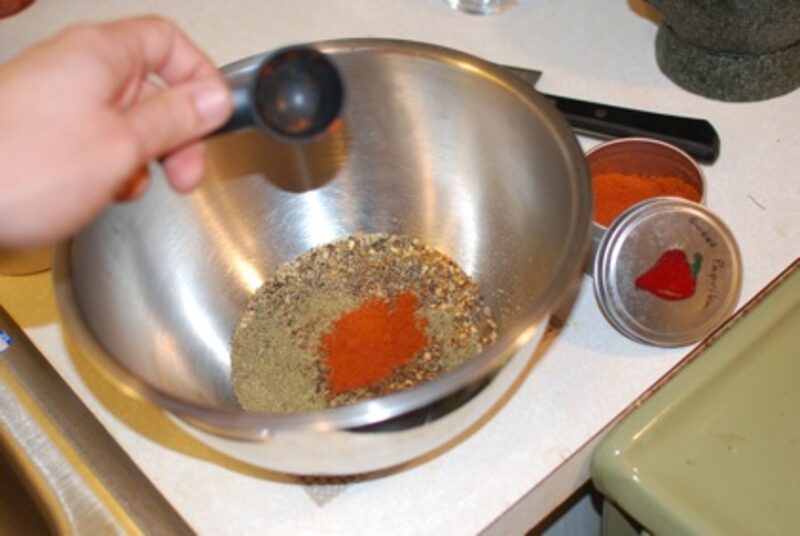
Put the ground spices in a bowl and add the powdered ingredients. First, paprika…
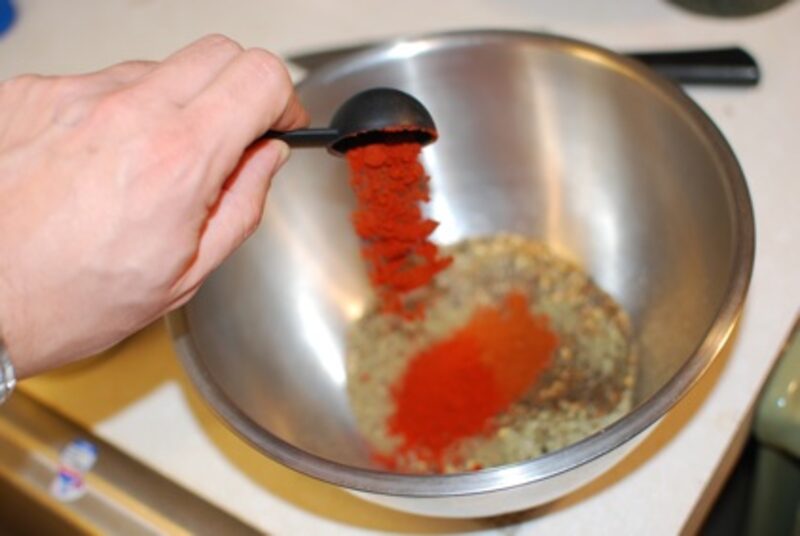
smoked paprika,
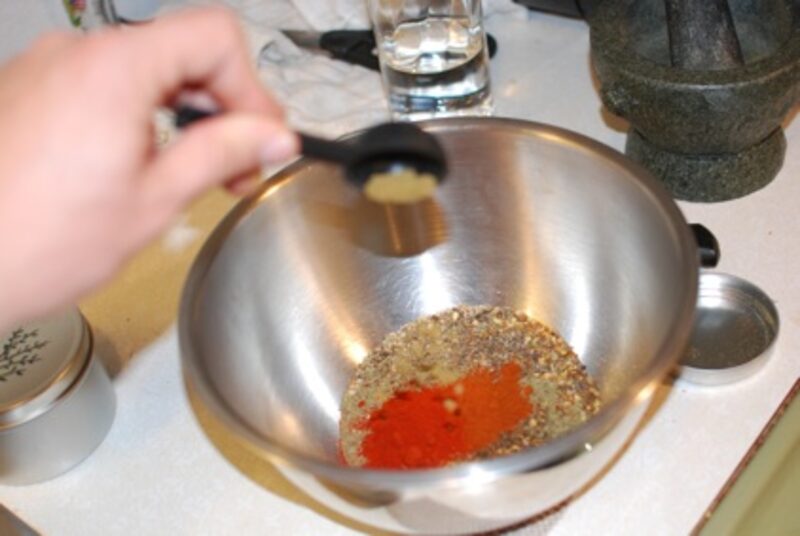
cumin,
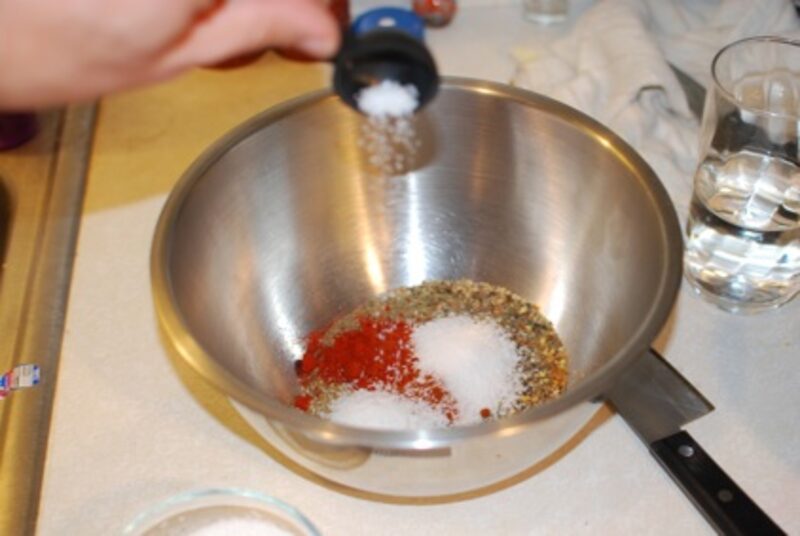
And salt. If you plan to marinate for more than a day, I would reduce the salt from 2 tablespoons to 1 tablespoon so it does not dominate.
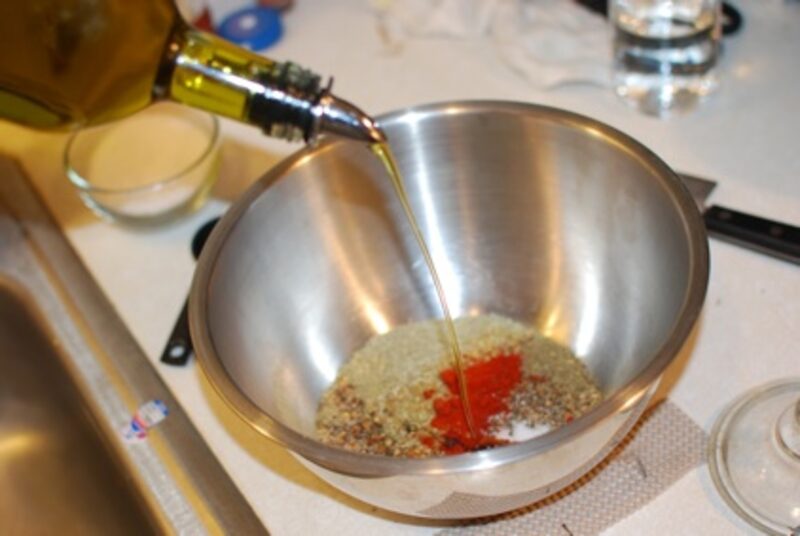
Once the dry ingredients are mixed, add ¼ cup of olive oil.
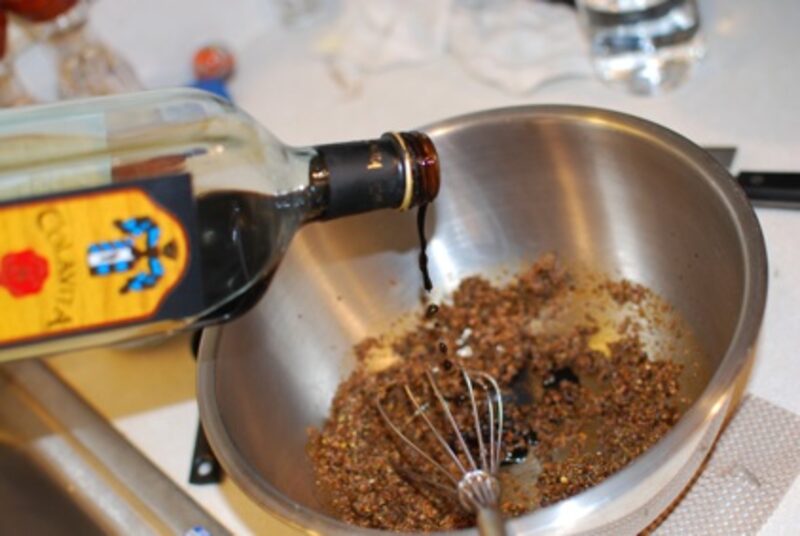
Follow with the vinegar.
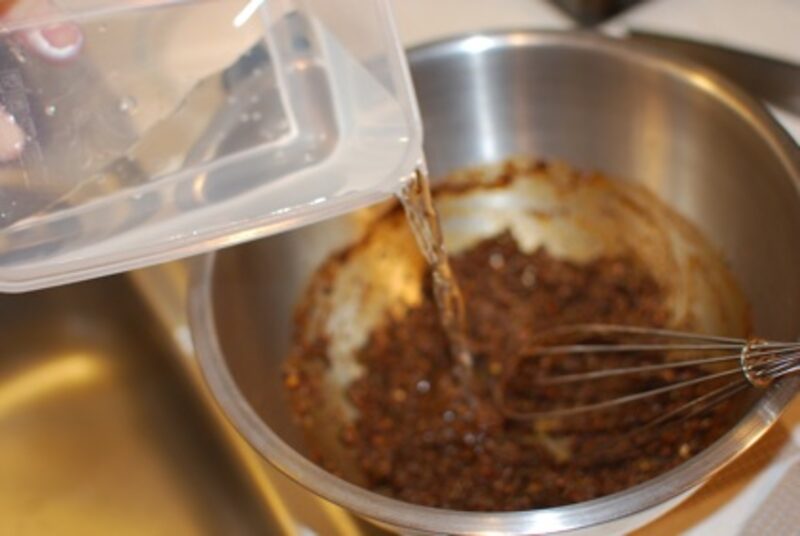
Add the water a little at a time, just until the mixture becomes a loose paste.
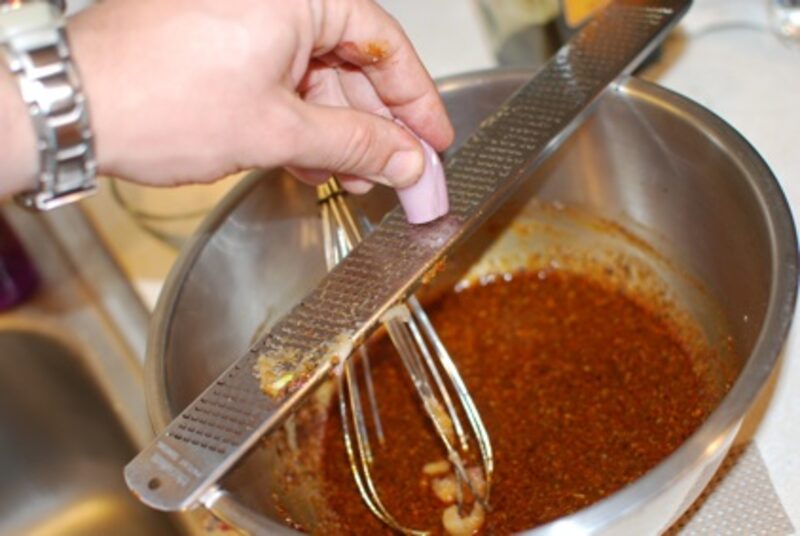
Grate the shallots into a soft pulp. I use a Microplane grater, but very finely mincing them works too.
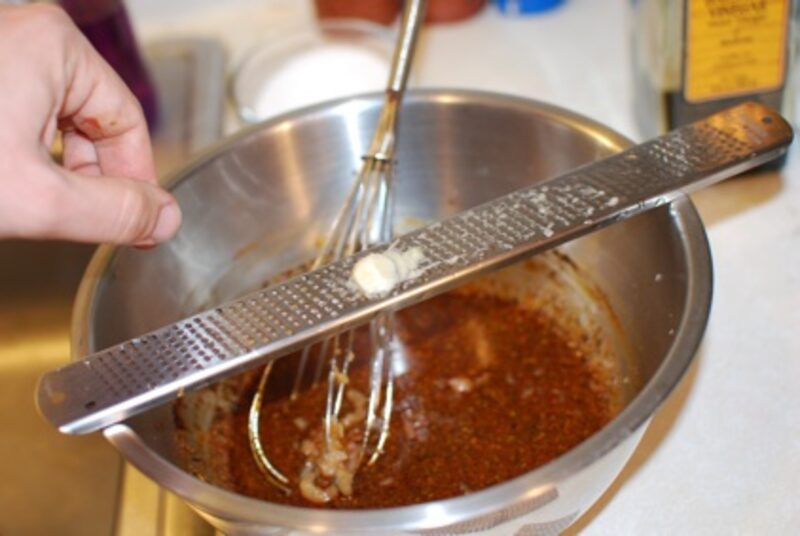
Do the same with the garlic. Finely chop the jalapeños and stir them in as well.
Here is the secret: give the marinade a few hours for the flavors to come together. Overnight is even better. Because it contains fresh alliums and peppers, keep it covered in the refrigerator rather than leaving it on the counter. The meat must stay refrigerated too.
Once the marinade has had time to mellow, turn your attention to the tenderloin.
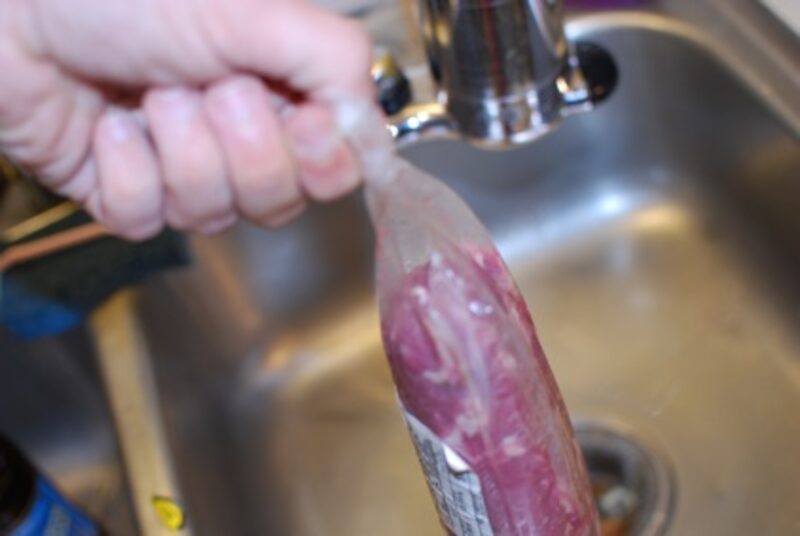
Tenderloins often come in airtight packages, sometimes as a pair.
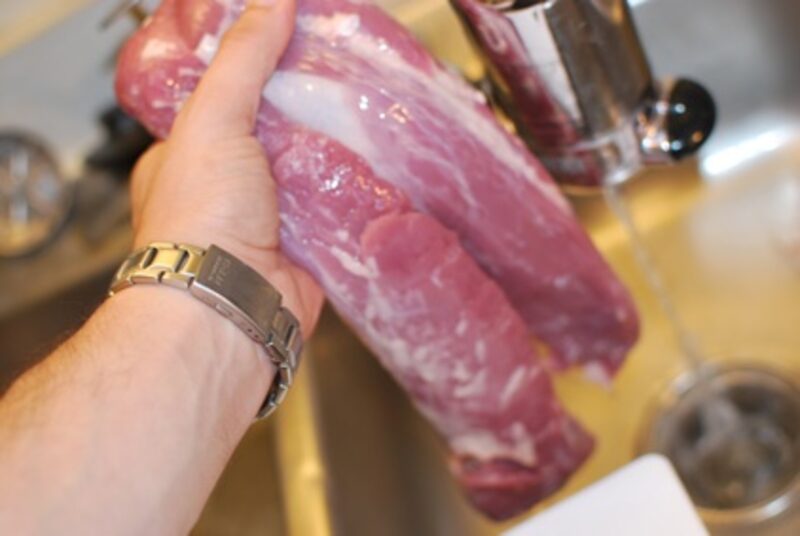
Unwrap and pat them dry with paper towels. There is no need to rinse raw pork; splashing can spread juices around the sink.
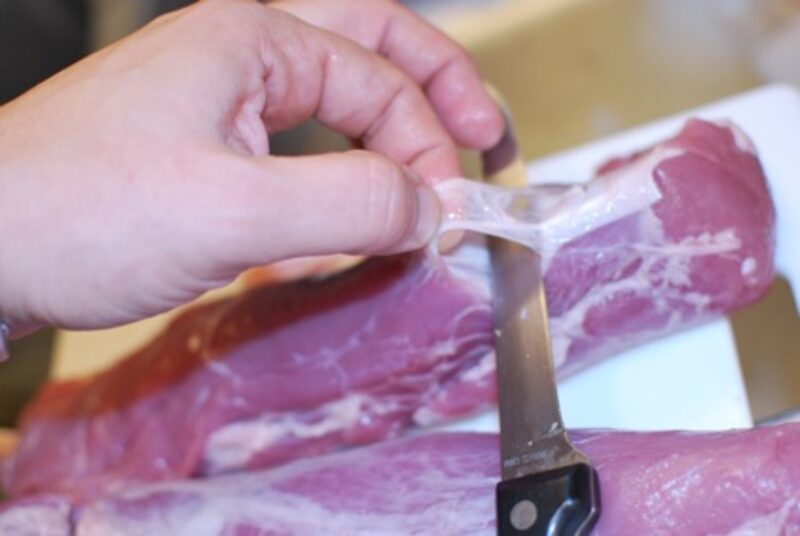
Leave the small amount of fat alone, but remove the silverskin, that tough membrane on the surface. It will not soften nicely in the oven.
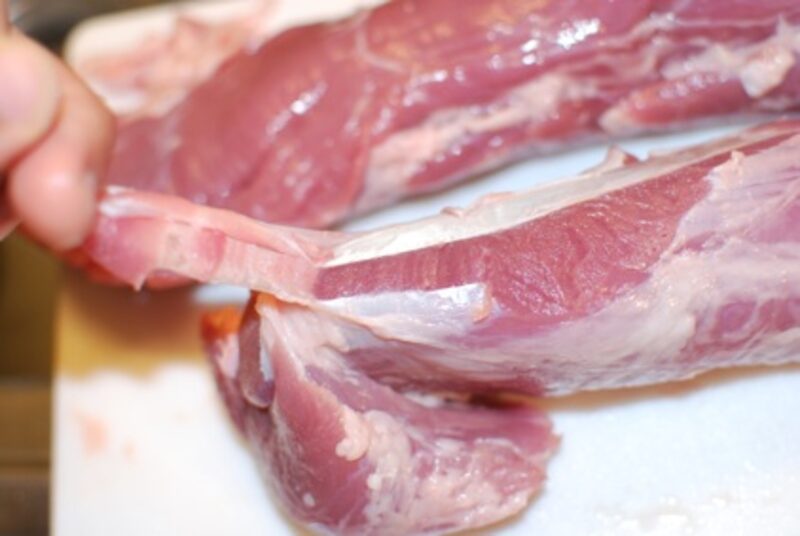
Work underneath it in small sections with a sharp paring knife or a flexible boning knife.
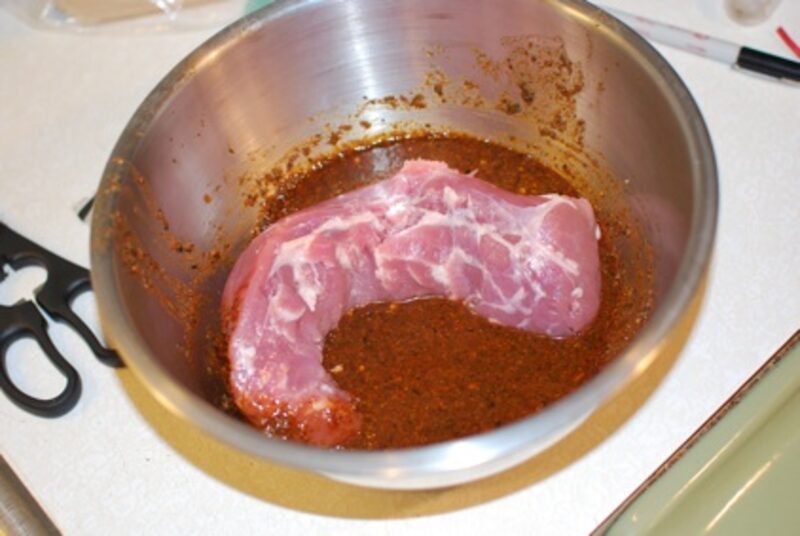
Add the tenderloins to the marinade.
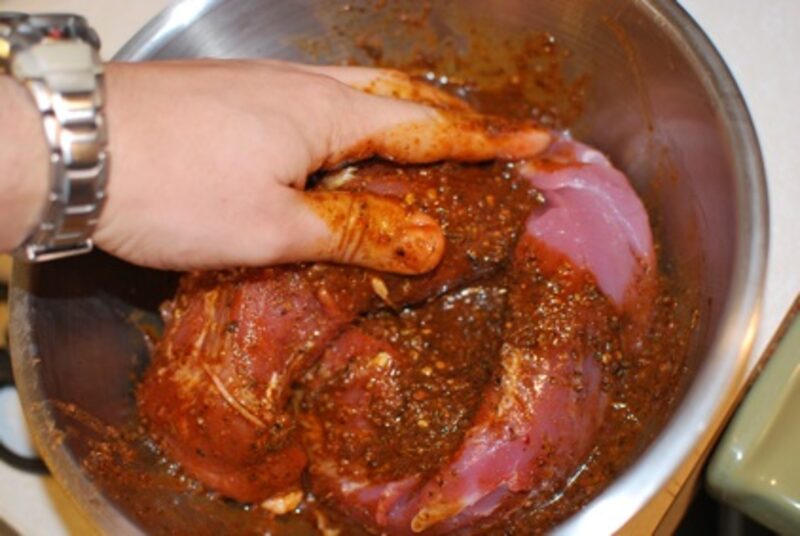
Turn them until they are coated all over.
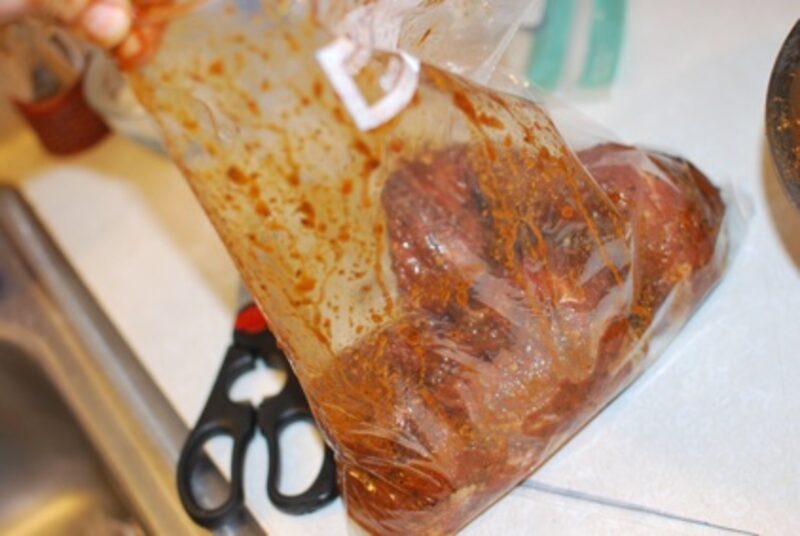
Transfer the pork and marinade to a resealable food-safe bag, or use a covered container.
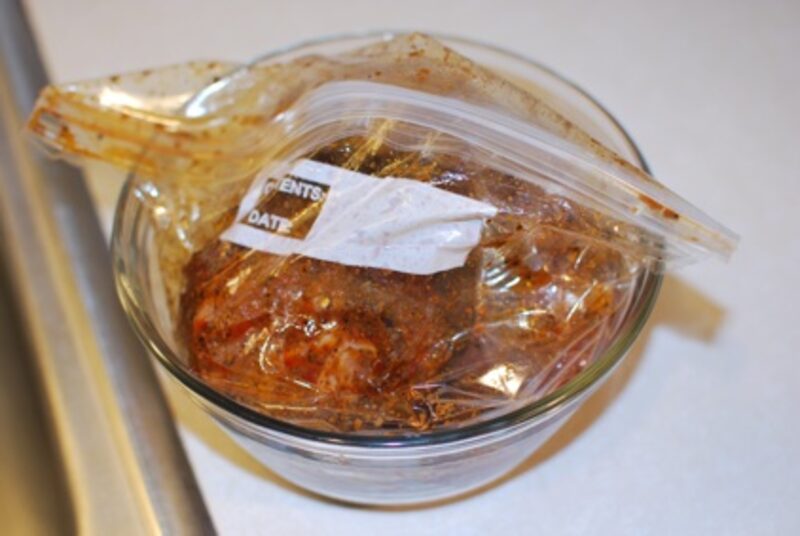
Set the bag in a container to catch any leaks and prevent cross-contamination in the refrigerator.
Marinate in the refrigerator for at least an hour. I like 1–2 days for this mixture, staying within the pork’s overall 3–5-day refrigerated storage window. Do not extend that time just because the meat is in a marinade.
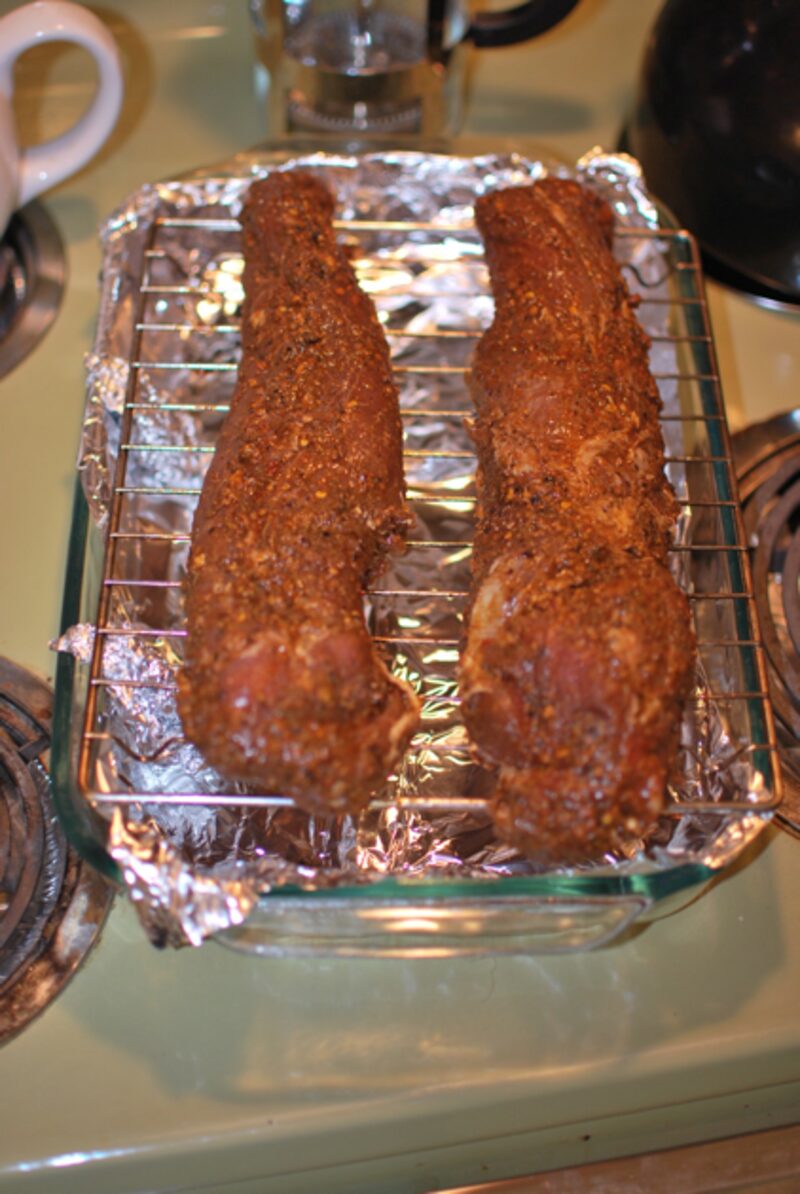
Place the pork on a rack over a foil-lined pan and roast at 400°F (200°C). The rack exposes the meat to the oven’s heat, and the foil catches the drippings.
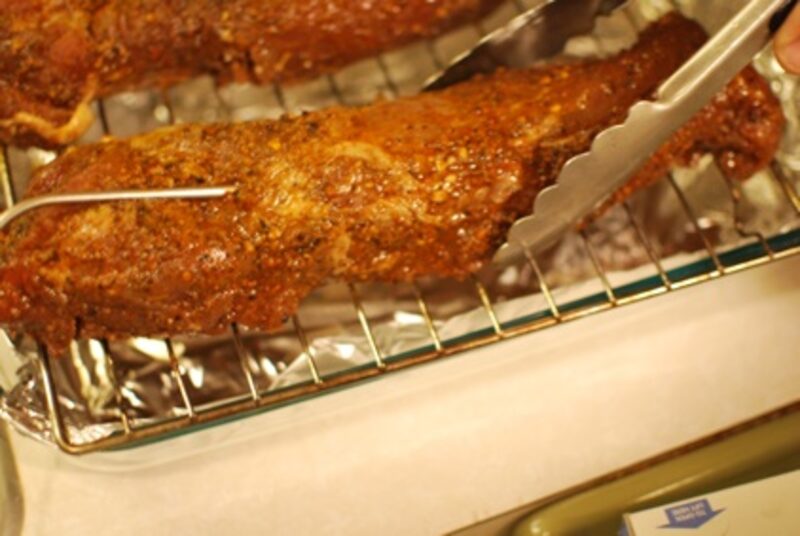
Insert a thermometer into the thickest part. For whole pork tenderloin, cook to at least 145°F (63°C), then rest it for at least 3 minutes. The thermometer matters much more than a guessed cooking time. See the USDA temperature guidance.
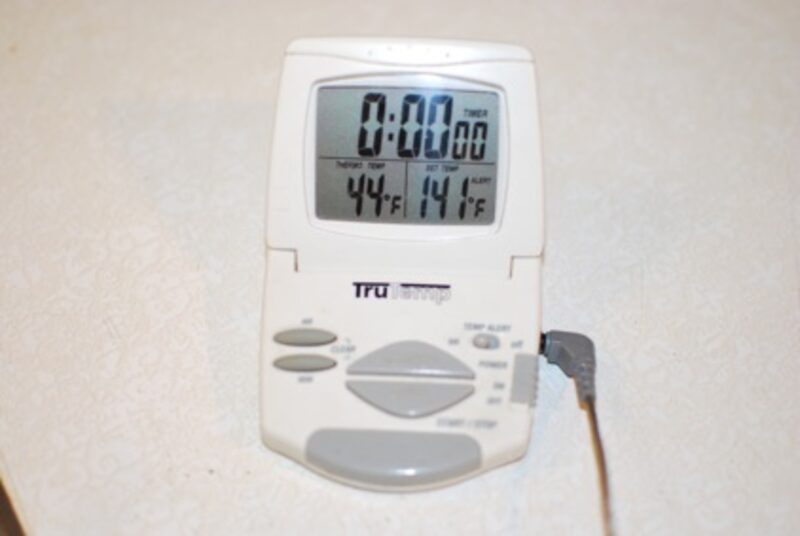
Set the thermometer alarm for 145°F (63°C), and check the coolest part of each tenderloin before removing it from the oven.
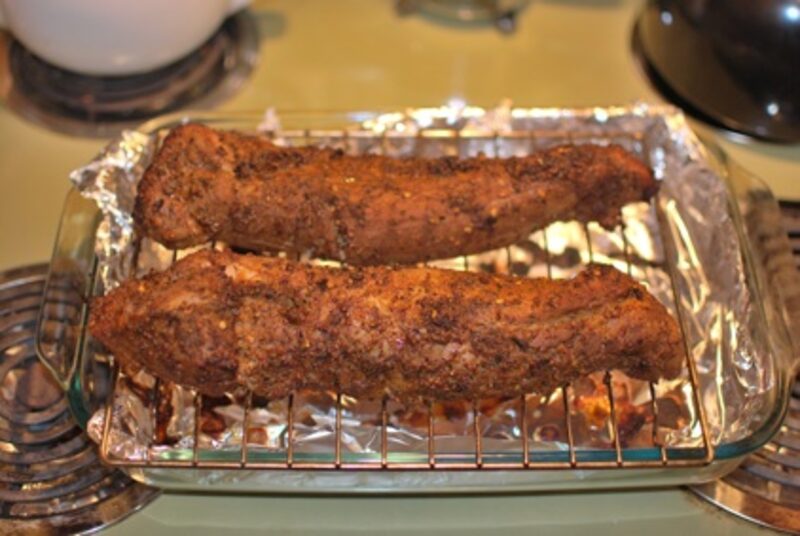
Mine took about 30 minutes, but thickness and the oven will change that. Check more than one spot and make sure every part has reached at least 145°F (63°C).
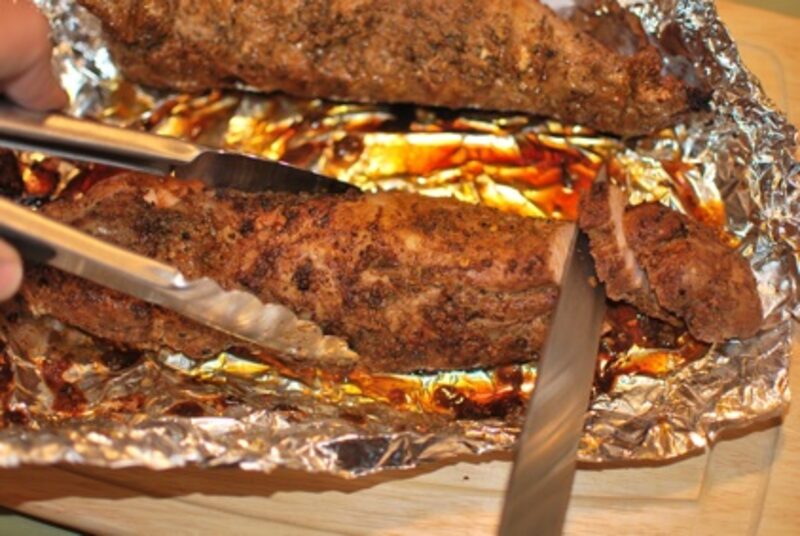
Rest the pork for at least 3 minutes before slicing, loosely tented with foil. It may be the longest three minutes of dinner. Slice slightly on the bias for presentation.
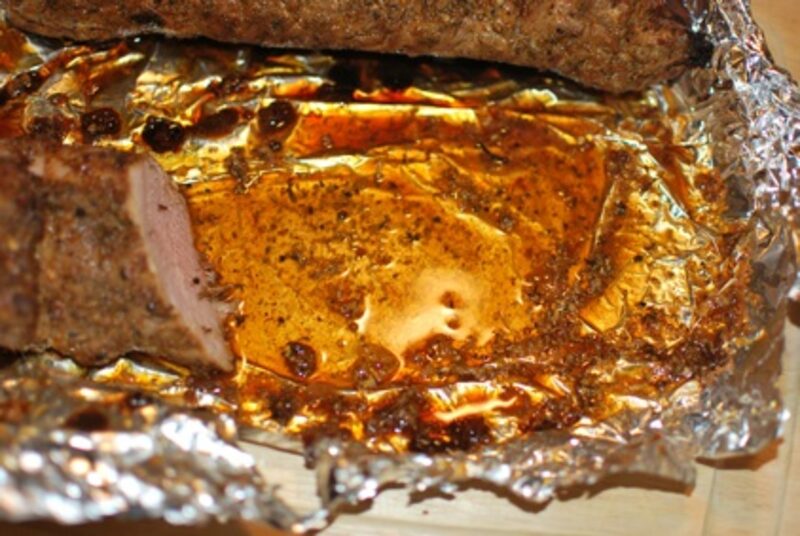
Look at those juices. Spoon the fully cooked pan juices over the sliced pork; do not use leftover raw marinade as a sauce unless it has been brought to a boil.
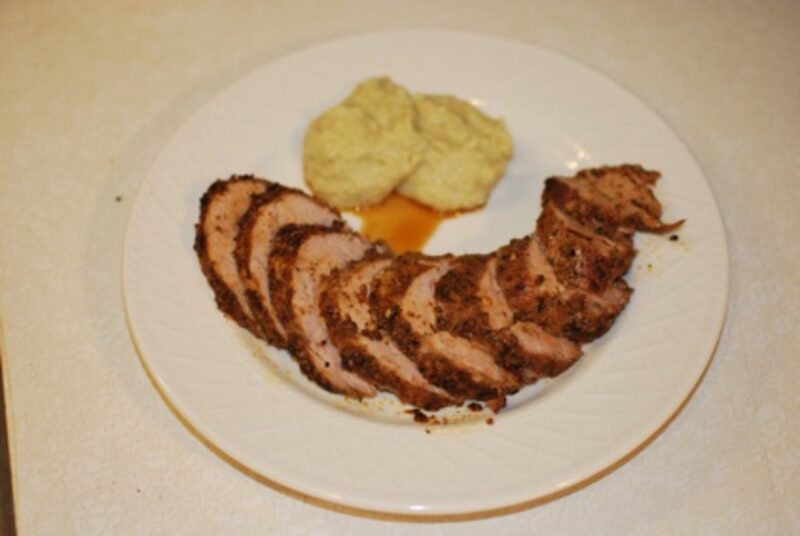
Like this!
The side dish is cauliflower purée. That one deserves its own post, and it is coming next.
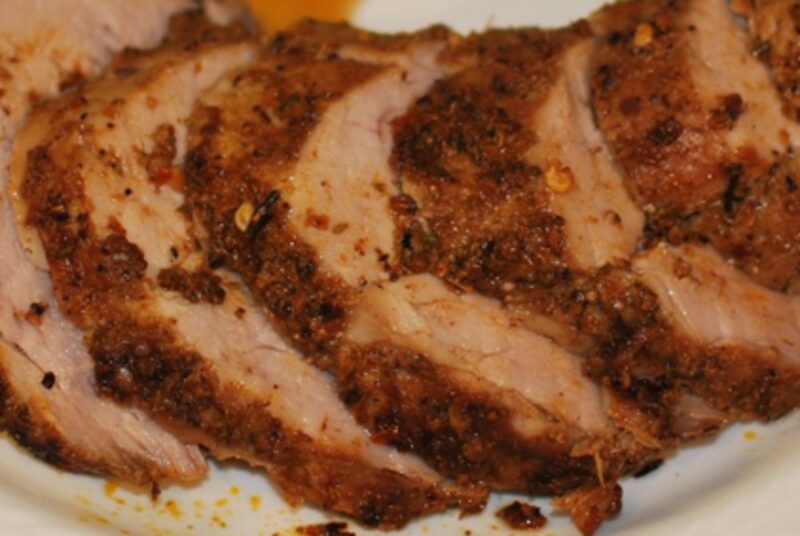
One last close-up. Hungry yet?