

A while ago I wrote about household alternatives to barware. Since then, I have refined my own setup. I am not a professional bartender, but I love making a well-balanced drink, and a home bar can be a wonderful focus for a gathering. You do not need professional equipment for every task. You need a few reliable tools, good ingredients, and enough curiosity to learn how they work.
This guide has two parts: tools and glassware first, then the spirits and flavorings that give you a useful starting selection. The product names below reflect my own earlier choices, not a current comparison of prices or availability. Build around the drinks you enjoy rather than trying to buy the whole list at once.
Stocking the bar
Bar essentials
 Boston shaker: A two-piece shaker gives the ice and ingredients room to move. Tin-on-tin and glass-and-tin versions both work, and neither makes a three-piece cobbler shaker inherently ineffective; the size and fill level matter. I have enjoyed seeing the ingredients through the glass version, but use a glass designed for shaking, inspect it for damage, and do not assume any household pint glass is a safe replacement. Choose parts that seal securely without forcing them together.
My earlier choice: The Schott Zwiesel Basic Bar Selection by Charles Schumann Boston shaker appealed to me for its substantial feel. Check the current product details and compatible parts before buying.
Another earlier option: The Bottles-Up two-piece Boston set was a budget alternative in the original article. Treat it as a historical recommendation rather than a statement of today’s price or stock.
 Hawthorne strainer: The coiled spring helps the strainer fit the shaker and hold back large ice pieces. It also catches larger solids, but fine pulp or herb fragments may need a second pass through a fine-mesh strainer. Look for a secure fit and parts that are easy to clean.
My earlier choice: The American Metalcraft S209 four-prong strainer. The removable spring makes cleanup easier; fit it to the shaker you actually use.
 Bar spoon—or chopstick: Stirring chills and dilutes spirit-forward drinks such as a Manhattan while introducing less air and fewer ice fragments than shaking. It does not prevent some mysterious “bruising” of the flavor. I often reach for a clean chopstick because it moves easily through the ice. A spoon also earns its keep by retrieving olives and cherries.
My earlier choice: A long Swissmar stainless-steel cocktail spoon with a flat-ended handle. Comfortable balance and enough length for your mixing vessel are the useful features.
 Muddler: A useful tool for fruit, herbs, and some spices. Press mint gently to release aroma rather than pounding it into bitterness. Choose a sturdy, food-safe surface that is easy to clean; lacquer is not a guarantee of hygiene, and a chipped finish is a reason to stop using the tool. Wash and dry it properly, and follow the maker’s dishwasher guidance.
My earlier wooden choice: The Oenophilia muddler. A wooden tool needs gentle hand washing and complete drying, following its care instructions.
Another option: A plain food-safe plastic muddler can be practical and inexpensive. A smooth working end is useful for herbs, and a secure grip matters when your hands are wet.
 Jigger and pony: Measuring is one of the quickest ways to make a drink repeatable. Jiggers come in different capacities, commonly including 1½ and 2 US fluid ounces; “pony” often means 1 ounce. Check the markings rather than relying on the name. One US fluid ounce is about 29.6 mL. Even experienced bartenders use measures—accuracy is not something you need to outgrow.
My earlier choice: A simple Excellante 1- and 2-ounce stainless-steel jigger. Clear internal markings and a comfortable grip are more useful than decoration.
 Cocktail glasses: A stemmed glass is useful for a drink served “up,” chilled and strained without serving ice. The stem keeps your warm hand away from the bowl. A coupe, Nick & Nora, or familiar conical glass can work; choose a capacity that leaves room above the drink. A smooth rim, stable foot, and sound construction matter more than weight alone.
 Old-fashioned or rocks glass: A short glass with room for a drink and ice. I like simple, undecorated versions with a stable base—the drink should be the star. Capacities vary, so match the glass to your usual serving. Lead-free glass or lead-free crystal is a practical choice.
My earlier preference: Plain Libbey rocks glasses with a substantial base. Easy replacement is a useful feature for home entertaining.
 Highball and Collins glasses: Both are tall styles for longer drinks with ice and mixers, although a Collins is often taller and narrower. Names and sizes vary. Choose a stable glass with room for the recipe, and muddle gently only in a vessel suitable for that task; a thick base does not make any glass unbreakable.
My preference: Straightforward tall glasses with a stable base and enough space for ice, mixer, and garnish without filling to the rim.
Non-Essentials tools, but good to have
Once you start enjoying tools, collecting them becomes easy. The following items are useful upgrades or specialists, rather than prerequisites for a good drink.
 Julep strainer: A perforated bowl with a handle, often used to strain a stirred drink from a mixing glass. A Hawthorne often fits a shaker tin more naturally. Neither is a badge of skill; choose the one that fits securely and gives you control.
My preference: A simple stainless-steel julep strainer that fits the mixing glass and is easy to wash. One is enough to start.
 Zester: A channel knife makes decorative strips, while a fine grater produces fine zest. I adore my Microplane, but it is a different tool from a channel knife. Both have sharp edges. Use a secure grip, keep fingers clear, and choose the cut the garnish needs.
My earlier choice: An OXO citrus zester with a comfortable nonslip handle and a channel-knife feature.
 Citrus juicer: A small press or handheld reamer handles most home-bar needs. I like my little reamer because it is quick to use and easy to clean. Strain seeds and pulp as needed. Pick a food-safe tool and follow its care instructions rather than assuming every wooden finish or plastic part is dishwasher-safe.
My favorite: The little yellow reamer that has earned its place in my bar. Convenience and easy cleanup are the point.
 Tin-on-tin Boston shaker: Two compatible metal tins make a durable, practical pair. Weighted bases can help stability, and the lack of a glass component removes one breakage risk. The rims can still bend, and metal becomes cold in use. Look for a pair designed to fit together instead of choosing pieces by an arbitrary size ratio.
My preference: A well-fitting, stainless-steel pair with comfortable edges and a dependable seal.
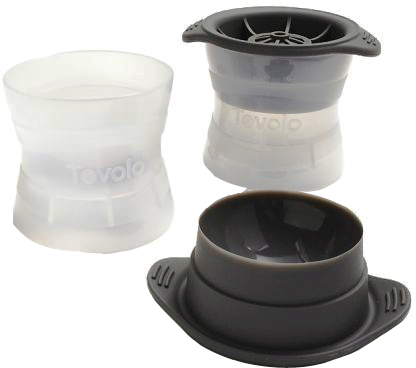 Ice-sphere mold: A large sphere looks wonderful in a short drink. Its low surface-area-to-volume ratio can slow heat transfer under comparable conditions, but slower melting and slower cooling belong to the same story. My home ice experiment explores the trade-off without proving a universal winner.
My earlier choice: Tovolo molds with a flexible cover. Follow the fill line, temperature limits, and cleaning instructions for the model you buy.
 Whiskey stones and reusable chillers: These cool a drink without intentionally adding water. I enjoy being able to add dilution separately, but their cooling capacity differs from melting ice. Use a product intended for beverages, and be careful not to let hard pieces strike your teeth or damage the glass.
My preference: The sealed metal-style chillers appealed to me. Their performance depends on construction and contents, not simply the fact that metal conducts heat well.
 Ice crusher: Useful for drinks served over crushed ice, including a julep or many tiki-style drinks. A clean ice bag and a suitable mallet can work for small quantities; keep the work surface stable and never use a drinking glass as the crushing vessel. If you crush ice often, a purpose-made machine is more convenient.
What I look for: A stable base or clamp, a safe feeding arrangement, and parts that are easy to clean. Prices in the original article are historical, not a current buying guide.
non-Essential drinkware, but good to have
Specialist glasses can make a favorite drink feel special. None is essential before you know you will use it.
 Cognac snifter: The broad bowl and narrower opening leave room above a small pour for aromas. A tulip-shaped tasting glass is another good choice. Do not fill according to the glass’s total capacity, and do not heat the spirit over a flame; room temperature or gentle hand warmth is enough.
My earlier preference: Libbey snifters. Choose a comfortable size and lead-free material, not a large serving simply because the bowl is generous.
 Whiskey tasting glass: A tapered opening and a bowl that is comfortable to hold can help you explore aromas. I like the Glencairn shape, but a clean small wine glass is a reasonable starting point. Enjoy the spirit neat, with a little water, or chilled according to your preference.
My earlier choice: Glencairn tasting glasses. Buy the number you expect to use; a tasting glass is a tool, not an instruction about how much or how often to drink.
 Mint-julep cup: A metal cup gives the drink its familiar frosted presentation. Fill and serve it according to the recipe, leaving room for the garnish. Choose food-safe drinkware rather than decorative metal vessels with unknown alloys or coatings.
What I look for: A food-safe interior, comfortable rim, stable base, and enough capacity for the intended drink. An expensive exterior is optional.
 Mule mug: The copper-colored mug is part of the Moscow Mule’s familiar presentation, but it is not necessary for the drink. Use a mug with a suitable food-safe lining, such as stainless steel: acidic lime juice should not contact bare copper. Inspect the lining and stop using it if damaged. Ginger beer is the usual mixer in the classic drink, while variations can use other spirits or mixers.
What I look for: A sound food-safe lining, secure handle, and comfortable size. Buy for the gatherings you actually host.
Stocking the Liquor Cabinet
Stock the liquor cabinet around a short list of drinks you want to make. You can add bottles as your interests grow. A 750 mL bottle is convenient for many home bars, but smaller bottles can be sensible for ingredients you use rarely.
Main Body Spirits
 Vodka: Often bottled at 40% alcohol by volume, though strengths vary, this is a relatively neutral base for drinks such as a Bloody Mary or Cosmopolitan. I especially like using it to carry unusual flavors, as in my tea-and-smoked-pepper experiments. Read the label rather than assuming that every bottle has the same strength.
My earlier choices: Smirnoff and New Amsterdam were affordable mixing options in my bar. A brand or price does not guarantee a headache-free morning; the amount of alcohol consumed matters.
 Rum: A spirit with deep Caribbean and Latin American traditions, made from sugarcane products. A light style is useful for a Daiquiri, Mojito, Piña Colada, or Cuba Libre, while aged and fuller-flavored rums open other possibilities. A Caipirinha traditionally uses cachaça, a distinct Brazilian spirit, rather than simply any white rum.
My earlier choice: Bacardi for a familiar light mixing rum. Choose the style to suit the drink; aged rum is not automatically unsuitable for cocktails.
 Tequila: A Mexican spirit, with classes including blanco, joven or gold, reposado, añejo, and extra añejo. Gold color does not mean every bottle is merely blanco plus caramel; a joven can also be a blend involving aged tequila. Read the label and choose for flavor and the drink you want to make.
My earlier preference: José Cuervo Tradicional. Check the particular expression, strength, and labeling rather than treating a brand name as one uniform product.

 Gin: Juniper gives gin its defining character, while other botanicals create an enormous range of styles. A straightforward dry gin is a useful starting point for familiar cocktails; more unusual botanical profiles can be wonderful when the recipe suits them.
My favorites in the original article: Hendrick’s for its cucumber-and-rose character, and New Amsterdam for a different aromatic profile. Bottling strengths vary by product and market, so read the label and adjust the recipe thoughtfully.

 Bourbon and rye: I enjoy bourbon in cocktails, but rye is an equally useful choice, especially for a Manhattan. Bourbon’s mash must contain at least 51% corn; the rest of the grain recipe varies. Its new charred oak contributes flavor, and “charred” does not mean the whiskey cannot have smoky notes. Pick the bottle for the drink instead of assuming one fixed mash bill.
My earlier choices: Bulleit and Redemption offered flavors I liked for mixing. Those are personal preferences from the original article, not a current ranking of the market.
Accents and Flavorings
Choose the accents for the drinks on your list: dry or sweet vermouth, an orange liqueur, bitters, and a few syrups can take you a long way. I keep vermouth and orange liqueur handy, along with simple syrup, grenadine, or agave syrup as needed. Refrigerate opened vermouth and follow the producer’s storage guidance. Triple sec and Grand Marnier have different styles; one is not merely the poor relation of the other.
There you have it: a home bar built around useful tools and drinks you actually enjoy. Start small, measure well, and let experience decide what belongs on the next shelf.
Happy shaking and cocktail-making!